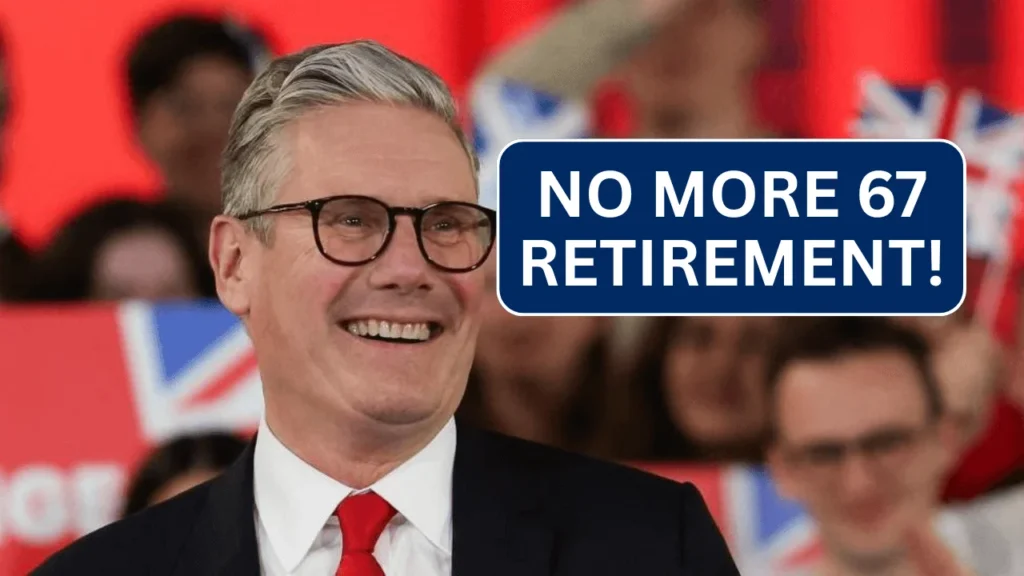
The landscape of retirement in the United Kingdom is undergoing its most significant transformation in a generation. For decades, the prospect of retiring at 65 or 66 was a standard expectation for the British workforce. However, the Department for Work and Pensions (DWP) has confirmed that the era of retiring at 66 is officially coming to an end, and for many, even the age of 67 is becoming a thing of the past. As we move into 2026, the government is accelerating its timeline for State Pension age increases, leaving millions of workers questioning when they will actually be able to hang up their hats and claim their hard-earned benefits.
The Immediate Shift Beginning April 2026
The first major wave of change arrives on April 6, 2026. This is the date when the State Pension age officially begins its phased increase from 66 to 67. Unlike previous changes that felt distant, this shift is now an immediate reality for those born in the early 1960s. The transition is not instantaneous for everyone; rather, it is a gradual “roll-out” that will see the age of 67 fully implemented for all men and women by 2028.
If you were born between April 6, 1960, and March 5, 1961, you are in the direct “impact zone” of this first phase. Your retirement date will shift by several months or even a full year depending on your specific birth month. This change is the result of legislation that has been in the works for over a decade, but as the 2026 deadline hits, the financial reality for those planning their exit from the workforce is becoming a primary concern for households across the UK.
Why the Government Is Pushing for 68
While the headlines are currently focused on the move to 67, the real “Goodbye” is directed at the long-term stability of retiring before 68. The UK Government is currently conducting a series of periodic reviews to determine how quickly the age should climb to 68. Under current law, the move to 68 is scheduled for the mid-2040s. However, recent reports from the Government Actuary’s Department have suggested that to keep the pension system “fiscally sustainable,” this date may need to be brought forward significantly.
The logic behind this push is simple but harsh: life expectancy, despite some recent plateaus, has historically increased, and the number of retirees compared to active taxpayers is reaching a tipping point. The government’s goal is to ensure that no more than 31% of an average adult’s life is spent in retirement. If people live longer, they must work longer. This “sustainability” argument is the driving force behind the 2026 updates and the looming possibility that the age of 68 could arrive as early as the late 2030s for younger workers.
Impact on Those Born in the 1970s and 1980s
If you are currently in your 40s or 50s, the “Goodbye to 67” message is particularly relevant to you. While the 2026–2028 window solidifies the age of 67 for the older cohort, Gen X and older Millennials are the ones who will likely face the move to 68. The DWP has remained committed to providing at least ten years’ notice for any changes to the State Pension age, which means the upcoming reviews in the next parliament will be the deciding factor for this age group.
For someone born in the late 1970s, the current trajectory suggests a State Pension age of at least 67, but financial experts are advising this group to plan for 68 as a “safety margin.” The uncertainty stems from the “intergenerational fairness” debate—the idea that today’s workers should not have to pay significantly more in National Insurance to fund the retirements of a generation that is living longer than any before it.
The New State Pension Rates for 2026
To soften the blow of a later retirement age, the UK Government has confirmed a significant boost to the State Pension amounts starting in April 2026. Thanks to the “Triple Lock” mechanism, which ensures pensions rise by the highest of inflation, average earnings growth, or 2.5%, the full New State Pension is set to rise to approximately £241.30 per week. This represents a boost of over £11 per week compared to the previous year.
For those who reached pension age before April 2016 and are on the Basic State Pension, the rate will climb to roughly £184.90 per week. While these increases are welcomed, many advocacy groups argue that they are barely keeping pace with the rising cost of living and the “hidden costs” of having to wait an extra year (or two) to access these funds. The extra year of work required to reach 67 effectively costs a retiree over £12,000 in “lost” pension payments, which the annual increase only partially recovers over time.
How to Check Your Exact Retirement Date
With the rules shifting, you should not rely on word-of-mouth or general age brackets. The most accurate way to find out when you can retire is to use the official “Check your State Pension age” tool on the GOV.UK website. By entering your date of birth, the system will provide you with:
-
The exact date you reach State Pension age.
-
The date you can claim Pension Credit (if eligible).
-
The date you become eligible for a free over-60s bus pass (though this varies by region, as discussed in local transport updates).
Checking this now is vital for your “Act Before Late” strategy. Knowing your date allows you to adjust your private pension contributions or ISA savings to fill the gap if you still wish to stop working at 65 or 66.
The Role of Private Pensions in the New Era
As the State Pension age climbs toward 68, the importance of Workplace Pensions and SIPPs (Self-Invested Personal Pensions) has never been higher. Most private pension providers allow you to access your funds at the “Normal Minimum Pension Age” (NMPA), which is currently 55 but is also rising to 57 in 2028.
This creates a “gap” of a decade or more between when you can touch your private savings and when the government starts paying your State Pension. Financial planners in the UK are seeing a surge in people “bridging” this gap—using their private pots to retire early and then using the State Pension as a top-up later. However, this requires a much larger private fund than previously thought, especially with the 2026 rule changes effectively moving the finish line further away.
Health and Workplace Challenges for Older Workers
One of the most controversial aspects of the 2026–2028 pension age hike is the “Fitness to Work” reality. While the government wants people to work until 67 or 68, many sectors—such as construction, healthcare, and manual labor—make this physically difficult.
The 2026 updates have prompted new discussions about “Mid-life MOTs,” where the government provides support for workers in their 40s and 50s to retrain for less physically demanding roles. However, critics argue that the rise in pension age will inevitably lead to an increase in people claiming disability-related benefits like PIP (Personal Independence Payment) or Universal Credit while they wait to reach the new, higher pension threshold.
Pension Credit: The Safety Net for 2026
For those who cannot work until 67 due to health or caring responsibilities, Pension Credit remains the primary safety net. In 2026, the eligibility criteria for Pension Credit are being highlighted as a way to support “the poorest pensioners.” This benefit tops up your weekly income and, perhaps more importantly, acts as a “gateway” to other support, such as the Winter Fuel Payment, Council Tax reductions, and free TV licences for those over 75.
If you are approaching 67 and have a low income or modest savings, it is essential to check if you qualify for this top-up. The government is actively trying to increase the take-up of Pension Credit, as thousands of eligible people currently miss out on this vital financial support every year.
The Impact of the 2026 Spring Statement
Chancellor Rachel Reeves’ latest financial statements have confirmed that there will be no U-turn on the planned increases to 67. The government is holding firm on the 2026–2028 timeline to help balance the national books. This clarity, while perhaps disappointing for some, provides a stable framework for financial planning.
The Spring Statement also emphasized that the “Triple Lock” is here to stay for the duration of this Parliament, providing a level of certainty for those who will be hitting the new age of 67 in the coming months. The message from the Treasury is clear: the pension will be higher, but you will have to wait longer to get it.
Preparing Your “Exit Strategy”
Given the “Goodbye to 67” reality, every UK worker needs a clear exit strategy. This should include:
-
A State Pension Forecast: Log into your personal tax account to see how many “qualifying years” of National Insurance you have. You usually need 35 years for the full amount.
-
Voluntary Contributions: If you have gaps in your record (perhaps from living abroad or taking a career break), you can often pay voluntary Class 3 NI contributions to boost your eventual pension.
-
Consolidating Old Pensions: Many workers have 3 or 4 different pension pots from previous jobs. Consolidating these in 2026 can help you see exactly how much “bridge money” you have.
-
Downsizing Plans: Some are looking at property as their “pension,” planning to downsize at 65 to release equity that covers the years until the State Pension kicks in at 67 or 68.
What to Expect Beyond 2028
Once the transition to 67 is complete in early 2028, all eyes will turn to the “Review of the 68.” The current law says this should happen between 2044 and 2046, but the 2026 review findings are expected to reignite the debate about moving this forward to the late 2030s.
For now, the focus remains on the immediate “Act Before Late” window for those turning 66 in 2026. The shift to 67 is no longer a “future problem”—it is the current reality of the British retirement system. By understanding these rules today, you can ensure that when your time to retire finally comes, you aren’t left standing at the finish line only to find it has been moved again.